
Apple Leather is made from apple waste (fruit peels and residues) as the main raw material, mixed with PU polyurethane and coated onto fabric base cloth to form a “biological-based vegan leather” with the texture of genuine leather.
Compared to traditional animal leather, Apple Leather not only contains no animal components but also effectively reduces carbon emissions caused by the landfill of food waste, and the finished product is lighter.
Apple Leather is suitable for making fashionable handbags, shoes, and small accessories, but not for commuting bags and travel bags that require long-term weight-bearing or frequent friction.
This post will explore the characteristics of Apple Leather and its adaptability for making bags.
- What Is Apple Leather?
- How to Make Apple Leather?
- How Long Do Apple Leather Last?
- Typical Service Life of Different Products
- Durability Benchmark (Compared with Similar Products)
- Durability Comparison
- Material Composition and Quality
- Usage Intensity and Methods
- Maintenance and Environment
- What Affects Apple Leather's Longevity
- Common Failure Points
- The durability of apple leather
- Summary of the Durability of Apple Leather Material
- Lifespan Comparison
- Techniques for Enhancing Durability
- How to Extend Its Life
- Apple Leather vs Real Leather
- Is Apple Leather Good for Making Bags?
- Where to Customize Apple Leather Bags, Belts & Purses?
- Conclusion
What Is Apple Leather?
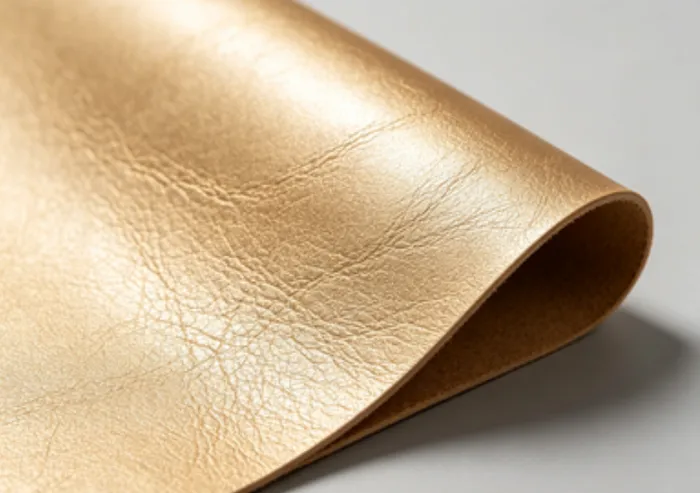
Apple leather (also known as AppleSkin or pellemela) is a pure plant-based and biogenic leather substitute, made from artificial leather materials derived from apple processing waste. It is typically made by drying and grinding these residues, such as apple juice, jam, apple peels, cores, and fruit pulp, and combining them with polyurethane (PU) or other biogenic materials to create a film-like material with a similar texture to genuine leather. It is one of the most innovative and environmentally friendly alternatives to animal leather available on the market today.
Apple leather falls under the category of “plant-based leather” or “vegan leather“. Its purpose is to reduce the environmental and animal resource impact of traditional animal leather. Compared to traditional leather, it typically uses less water during production and avoids the pollution issues caused by some tanning chemicals, thus being regarded as a more environmentally friendly material choice.
The Origin of Apple Leather
It was invented by Italian researcher Alberto Volcan (Bolzano, Italy).
It was developed in collaboration with the recycling company Frumat; commercialization was achieved around 2019.
A circular economy material: converting agricultural waste into fashion/textile raw materials.
Key Properties of Apple Leather
| Feature | Detail |
| Bio-based content | ~66% bio-based, exceeding industry standards |
| Vegan & Animal-Friendly | 100% free from animal components; no animal testing |
| Water-resistant | Wipeable when wet; not recommended for full submersion |
| Durable | Strong abrasion & tear resistance, comparable to real leather |
| Feel | Smooth, supple hand-feel that closely mimics animal leather |
| Sustainability | Gives farmers a second income from waste; diverts apple pomace from landfills |
Note: Due to the presence of approximately 30% petroleum-based polyurethane components, this product is not completely biodegradable. However, plant-based polyurethane alternatives are currently under development.
The Uses of Apple Leather
- Luggage and small leather items: handbags, wallets, card holders, phone cases, cross-body bags.
- Footwear: flat shoes, sports shoes, sandals.
- Accessories: belts, watch straps, keychains.
- Interior: lightly used furniture, car interiors.
Summary of Common Uses
| Product | Why Apple Leather Fits |
| Fashion handbags | Lightweight, novel sustainability story |
| Footwear | Soft, flexible uppers |
| Wallets and small goods | Lower wear demands |
| Phone cases and tech accessories | Trendy eco-conscious positioning |
| Labels and tags | Marketing appeal for sustainable brands |
Notable Brands Using Apple Leather
| Brand | Application |
| AppleSkin™ (Frumat) | The original Italian-developed material; used by multiple fashion brands |
| LØCI | Sneakers |
| Samos | Bags and accessories |
| Womsh | Footwear |
| Various emerging brands | Vegan fashion lines |
Notable brands also include SAMARA, Sylven New York, Good Guys Don’t Wear Leather, and Oliver Co.
Cost and Supply Situation of Apple Leather
The production cost of leather products made from apple peels is usually 20% to 30% higher than that of traditional vegan leather (such as PVC or polyurethane), and the consumer purchase price may be even twice as high. Moreover, the supply is extremely limited – the raw materials rely on apple juice production in Europe, which makes large-scale production difficult.
Comparison with Other Leather Types
| Material | Source | Biodegradable | Durability | Cost |
| Genuine leather | Animal hide | No (tanned) | High | Moderate to high |
| Apple leather | Apple waste + PU | Partial | Moderate | Moderate to high |
| PU leather | Petroleum-based | No | Moderate | Low |
| PVC leather | Petroleum-based | No | Low to moderate | Lowest |
| Mushroom leather (Mylo) | Mycelium | Partial | Moderate | High |
| Pineapple leather (Piñatex) | Pineapple leaf fibers | Partial | Moderate | High |
How to Make Apple Leather?
The production of apple leather is a circular process that upgrades industrial waste into a durable and flexible biobased material. However, its fundamental principle can be understood as a manufacturing method for a biological composite material.
Step-by-Step Production Process
| Step | Process | Details |
| 1. Collect Waste | Source apple pomace from juice/cider factories | Mainly from Bolzano, Italy — Europe’s largest apple-growing region |
| 2. Dry & Grind | Apple waste is dried and ground into a fine powder/pulp | Removes moisture; creates a cellulose-rich material |
| 3. Purify | Mechanical purification removes impurities | Leaves clean cellulose fibers that act as a natural “filler” |
| 4. Mix with PU | Apple powder is blended with polyurethane (PU) | Typically 50% apple waste + 50% PU (or ~66% bio-based content) |
| 5. Laminate | The mixture is spread and laminated onto a base fabric | Base is usually recycled cotton & polyester canvas |
| 6. Coat & Cure | A protective resin coating is applied and heat-dried | ~100°C machine for drying; ensures durability & water resistance |
| 7. Emboss & Finish | Pressing machine creates texture (smooth, snake, crocodile, etc.) | Gives the leather its final look and hand-feel |
Key Materials Breakdown
| Component | Percentage | Role |
| Apple waste (peel + pulp + fiber) | 50-66% | Bio-based filler; reduces need for petroleum materials |
| Polyurethane (PU) | 30-50% | Binder that gives durability, flexibility & water resistance |
| Recycled cotton/polyester fabric | Base layer | Structural backing |
Limitations
| Challenge | Detail |
| Not 100% biodegradable | PU content (~30%) is petroleum-based; fully bio PU is still in development |
| Limited supply | Depends on European apple juice production; can’t easily scale |
| Higher cost | 20–30% more expensive to produce than conventional vegan leather; retail prices can be 2× higher |
| Fewer color options | Dye selection is more limited than traditional leather |
Can You Do It Yourself at Home? (DIY Version)
If you want to make small batches of materials for handmade crafts at home, you can try a simplified version using natural adhesives:
- Mix: Blend the remaining apple peels into a smooth puree.
- Stir: Mix the puree with natural adhesives (such as glycerin, to increase flexibility) and a small amount of water. Some DIYers may also add a small amount of alginate or gelatin to help it set.
- Apply: Apply the mixture very thinly and evenly on a silicone baking mat or parchment paper.
- Dry: Bake at a very low temperature (about 170°F / 75°C) or let it dry naturally for several hours until it becomes an elastic, leather-like sheet.
Home vs. Industrial
Industrial: Powder + PU + fabric backing (durability for bags/shoes).
Home (simple fruit leather): Apple puree → spread → dry (no PU, fragile, for snacks).
How Long Do Apple Leather Last?
The products made of apple leather are quite durable. However, their actual service life also depends on the quality of the manufacturing process and the care you give to them. The lifespan of apple leather products under normal use is 2 to 5 years; if high-quality materials are used and proper maintenance is provided, it can last up to 7 years.
Typical Service Life of Different Products
Wallet/credit card holder (light use): 3 to 5 years
Handbag (daily use): 2 to 4 years
Shoes/ belts (high friction) : 1 to 3 years
Mobile phone case/accessories: 2 to 5 years
Durability Benchmark (Compared with Similar Products)
Apple leather: 20,000 to 30,000 wear cycles; 10,000 to 25,000 bending cycles
Polyurethane leather: 60,000 to 100,000 wear cycles; 50,000 to 70,000 bending cycles
Full-grain cowhide: More than 40,000 wear cycles; More than 50,000 bending cycles
Durability Comparison
Apple leather: 2 to 5 years; sustainable, vegan, medium durability
Polyurethane leather: 3 to 5 years; cheap, durable, poor environmental friendliness
Real cowhide: 10 to 30 years or more; extremely durable, will form a luster
Key Factors Affecting the Lifespan of Apple Leather
Material Composition and Quality
Core limitation: Apple leather is a composite material. The surface layer is a mixed coating of apple waste and polyurethane (PU), and the bottom layer is a fabric substrate. Its lifespan is mainly limited by the aging of the PU layer and the risk of delamination between the coating and the substrate.
Quality differences: Different brands use different formulations, PU quality, coating thickness, and substrate strength, which significantly affect durability.
Usage Intensity and Methods
Light daily use (such as wallet, notebook cover): With careful use, it may last for 3-5 years.
High-frequency moderate use (such as daily handbags, shoe uppers): More creases, surface wear, or edge cracking are likely to occur, and the lifespan may be around 2-3 years.
High-intensity wear or exposure: Not suitable for occasions requiring extremely high wear resistance, scratch resistance, or frequent bending.
Maintenance and Environment
Proper maintenance (regular cleaning with a soft damp cloth, avoiding the use of chemical agents, using dedicated care products) can significantly extend the lifespan.
Avoiding exposure to extreme conditions (long-term sun exposure, high temperature, humidity, sharp objects) is the key to preventing the PU layer from prematurely hardening, cracking, or fading.
What Affects Apple Leather’s Longevity
| Factor | Impact |
| Apple-to-PU ratio | Higher apple content (40–50%) is more eco-friendly but can be less durable than PU-heavy blends |
| Backing fabric | A strong woven cotton or polyester backing improves structural integrity |
| Thickness | Thicker sheets (0.8–1.2 mm) last longer than thin fashion-grade material |
| Surface coating | A quality topcoat protects against abrasion and moisture |
| Usage intensity | Daily commuter bags wear faster than occasional-use clutches |
| Climate | Hot, humid environments can accelerate PU binder degradation |
Common Failure Points
| Issue | Cause | When It Occurs |
| Surface cracking | PU binder dries out and loses flexibility | Year 2–4, especially at fold points |
| Peeling at edges | Delamination between apple layer and backing | Year 1–3 with heavy use |
| Color fading | UV exposure breaks down natural pigments | Gradual, especially in sunny climates |
| Staining | Porous surface absorbs oils and dyes | Immediate if untreated |
The durability of apple leather
| Source | Estimated Lifespan | Remarks |
| Laboratory test by an Indian inventor (2025) | Approx. 15–17 years | The material is 75% cheaper than traditional leather and made from apple waste. |
| AppleSkin™ supplier (2024) | Good quality, durable | Specific care guidelines available online (e.g., apple leather bag care). |
| Well known brand apple leather bag (2023) | Surprisingly sturdy and smooth | Smooth finish bags may show scratches and creases. Reference price: $495. |
| Third party leather goods manufacturer (2025) | High quality apple leather bags: approx. 2–5 years | Less durable than genuine leather, but a preferred choice for environmentalists. |
| Multiple lab tests (2021) | Inferior to genuine leather in tensile strength, heat resistance, abrasion resistance | Material properties cannot match genuine leather. |
| Consumer feedback | Mixed experiences | One user reported that an Apple Watch strap deteriorated after 1.5 years; another said a bag wore out within a year. |
Summary of the Durability of Apple Leather Material
| Metric | Value |
| Lab-tested lifespan | 15–17 years |
| Real-world accessories (wallets, bags) | 2–5 years with proper care |
| Tensile strength | 500–700 N/5cm (vs. 200 N/5cm automotive standard — very strong) |
| Abrasion resistance | Martindale score of 50,000 (extremely high) |
Lifespan Comparison
| Material | Typical Lifespan | Notes |
| Genuine leather (full-grain) | 10–30+ years | Develops patina; repairable |
| Genuine leather (chrome-tanned) | 5–15 years | Softer but less resilient than full-grain |
| Apple leather | 2–5 years | Moderate durability; improving with newer formulations |
| PU leather | 1–3 years | Prone to cracking and peeling |
| PVC leather | 2–4 years | Stiffer; surface cracks over time |
Techniques for Enhancing Durability
To extend the lifespan of apple leather products, treat them as you would fragile synthetic materials:
- Avoid extreme heat and direct sunlight exposure: Prolonged exposure to direct sunlight or high temperatures (such as placing the bag in a hot car) can cause the adhesive to dry out, making the material brittle and prone to cracking.
- Keep dry: Although many apple leathers have some degree of water resistance, they are not waterproof. If it gets wet, wipe it clean with a soft cloth and let it air dry naturally.
- Gently clean: Use a damp cloth with mild soap for cleaning. Avoid using irritating chemicals or rough brushes to prevent damage to the surface coating.
- Proper storage: When not in use, store the items in a cool, dry place. It’s best to use paper to block them to maintain their shape and prevent deep creases.
How to Extend Its Life
| Care Tip | Effect |
| Avoid prolonged sun exposure | Prevents UV degradation of the PU binder |
| Keep dry | Water can swell the apple fibers and weaken the matrix |
| Condition with PU-safe product | Specialized synthetic leather conditioner maintains flexibility |
| Store stuffed | Prevents creasing and stress cracks |
| Clean gently | Damp cloth only; harsh chemicals attack the PU coating |
Apple Leather vs Real Leather
Apple Leather and Real Leather are two materials with completely different concepts and characteristics.
Apple Leather vs. Real Leather
| Dimension | Apple Leather | Real Leather |
| Source | Apple juice industry waste (pomace, peels) + polyurethane (PU) + fabric backing | Animal hides (cow, sheep, goat, etc.), mainly a by product of the meat industry |
| Composition | Bio based content approx. 40–85% (varies by brand); the rest is plastic binder | 100% animal collagen fibres |
| Hand feel | Close to genuine leather but lacks the warm, natural feel; some products feel slightly plasticky | Soft, full, elastic; full-grain leather has fine pores and a natural touch |
| Breathability | Poor (PU layer is non-breathable) – may feel clammy in summer | Excellent – natural fibre structure allows air and moisture exchange |
| Durability | Low to medium; lab tests suggest 2–5 years; not resistant to sharp objects; edges wear easily | High; quality real leather can last 10–30 years and develops a patina with use |
| Water resistance | Good (PU surface repels spills) | Fair (untreated leather is water-sensitive, but can be given a waterproof coating) |
| Tear strength | Low (short fibres held together by plastic binder) | Very high (tightly interwoven collagen fibres) |
| Maintenance | Easy – wipe with a damp cloth; avoid chemical cleaners | More complex – regular cleaning, conditioning, and water protection |
| Environmental impact | Pros: uses agricultural waste, reduces landfill, no animal slaughter. Cons: contains non-biodegradable PU, energy intensive production, may shed microplastics | Pros: natural, biodegradable, long life (fewer replacements). Cons: livestock industry has high carbon footprint; tanning (especially chrome) can be polluting |
| Price | Mid-range; bags approx. 100–100–500 | Wide range: 50(low-end)to50(low–end)to5000+ (luxury brands) |
| Patina / ageing | Does not develop a patina; may fade or delaminate over time | Quality real leather (especially vegetable-tanned) develops a rich patina – becomes more beautiful with age |
| Brand examples | Mansur Gavriel, Matt & Nat, SAMARA, KALO | Hermès, Chanel, Gucci – virtually all traditional leather goods brands |
Apple Leather vs. Real Leather: Pros & Cons
| Dimension | Apple Leather | Genuine Leather (Real Leather) |
| Source & Nature | Composite Material: Apple waste + Polyurethane (PU) + Fabric backing. An innovative leather alternative. | Natural Material: Primarily derived from animal hides (e.g., cow, sheep), processed through tanning. |
| Key Advantages | 1. Eco-Conscious Concept: Utilizes food industry waste, reducing landfill. 2. Cruelty-Free: 100% vegan, no animal involvement. 3. Consistency: Uniform appearance, color, thickness; no natural flaws. 4. Lightweight: Typically lighter than leather. 5. Easy Care: Generally,it only requires wiping with a damp cloth. | 1. Exceptional Durability: High-quality full-grain leather gains character with age, lasting decades. 2. Unique Character: Natural grain, smell, and the patina developed over time, offering irreplaceable value. 3. Biodegradability: Vegetable-tanned leather is naturally biodegradable. 4. Breathability: Natural fiber structure provides superior comfort and breathability. |
| Key Disadvantages | 1. Limited Lifespan: PU coating can degrade with use (cracking, hardening), typically lasting 2-5 years. 2. Environmental Impact: Contains petroleum-based PU, not fully biodegradable; production involves chemicals. 3. Difference in Feel: Lacks the premium tactile feel and natural evolution of leather. 4. Difficult to Repair: Surface damage is hard to fix perfectly. | 1. Environmental Debate: High carbon footprint from livestock; traditional chrome tanning can cause pollution. 2. Animal Ethics: Involves animal products. 3. High Cost: Premium leather is expensive. 4. High Maintenance: Requires regular cleaning and conditioning to prevent drying/cracking. 5. Natural Imperfections: May have scars, uneven grain, etc. |
| Ideal Applications | Fast-fashion items, eco-conscious accessories: e.g., fashion handbags, shoes, phone cases, budget-friendly furniture accents. | High-end durable goods, heirloom items: e.g., luxury leather goods, fine footwear, long-lasting sofas, car seats, tool belts. |
How to Tell Them Apart
| Test | Apple Leather | Real Leather |
| Wrinkle test (press finger) | Stays flat, depresses like plastic | Wrinkles like skin |
| Smell | Neutral or slightly chemical | Earthy, organic |
| Edges | Clean, straight cut | Fibrous, rough |
| Water drop | Beads up (PU coating) | Absorbs slowly |
How to Choose?
Your choice depends on the core priorities:
Choose apple leather if you prioritize:
- Environmental protection and animal ethics: Support waste utilization and zero cruelty concepts.
- Consistency and design: Need uniform color and texture for fashion design.
- Budget and lightness: Look for cost-effective and lightweight alternatives.
Choose real leather if you prioritize:
- Ultimate durability and heritage: Pursue the quality of “using for a lifetime” and the texture that appreciates over time.
- Natural texture and performance: Value unique texture, breathability and premium touch.
- Biodegradable: Select genuine leather processed with environmentally friendly methods.
Is Apple Leather Good for Making Bags?
Apple leather is a great innovative choice for making handbags, especially in today’s era where the concept of sustainability is increasingly important. It has delivered a satisfactory performance in terms of environmental protection and aesthetics, but in terms of durability, it still falls short compared to traditional animal leather.
The Key Pros and Cons of Apple Leather for Making Bags
| Aspect | Pros | Cons |
| Environment & Ethics | Vegan, cruelty-free; uses by products of the apple juice industry, reducing waste; lower carbon and water footprint (up to 85% less CO2, 99% less water) | Still contains petroleum-based PU and synthetic materials; not 100% natural; end of life recycling or biodegradation is challenging |
| Look & Feel | Looks and feels very close to genuine leather; smooth surface, rich colour range, colours stay vibrant | Smooth finishes tend to show scratches and creases more easily |
| Functionality | Water and stain resistant – more worry free for daily use; breathable and hypoallergenic, good for sensitive skin | Less plump and elastic than high quality real leather |
| Durability | Good abrasion and tear resistance (e.g., tensile strength 500–700 N/5cm); also UV-resistant | Relatively shorter lifespan – high quality bags typically last 2–5 years |
| Cost & Value | Generally more affordable than a comparable genuine leather bag | Still an emerging technology; raw material can be more expensive than conventional PU |
Comparison for Bag Making
| Material | Suitability for Bags | Best For |
| Full-grain cowhide | ⭐⭐⭐⭐⭐ Excellent | Lifetime daily bags |
| Goatskin | ⭐⭐⭐⭐⭐ Excellent | Everyday soft bags |
| Calfskin | ⭐⭐⭐⭐ Very Good | Structured luxury bags |
| Apple leather | ⭐⭐⭐ Moderate | Fashion, vegan, occasional use |
| PU leather | ⭐⭐ Poor | Budget, short-term fashion |
| Canvas / nylon | ⭐⭐⭐⭐ Very Good | Rugged daily use |
Suitable and Unsuitable types
✅ Highly recommended
- Mini bags, clutches, evening bags
- Crossbody bags, everyday lightweight backpacks
- Fashionable trendy bags, vegan/sustainable-themed bags
- Small wallets and makeup bags
❌ Not recommended
- Large durable handbags, laptop bags, travel bags
- High-end luxury bags designed for decades of use
- Outdoor or harsh environment bags
Purchase and Usage Suggestions
- Identify promotional terms: Some brands may claim that their apple leather is “plant-based” or “100% vegan”, but it usually contains a certain proportion of petroleum-based polyurethane (PU). Therefore, do not be deceived by the “pure natural” claim.
- Pay attention to the quality of hardware components: Not only the fabric but also the quality of hardware components such as zippers and buckles is important for the lifespan of the bag. When purchasing, you can pay attention to these details.
- Extend the service life: After daily use, wipe it with a soft damp cloth to keep it clean and shiny. At the same time, avoid scratching the bag with sharp objects to protect its smooth surface.
Where to Customize Apple Leather Bags, Belts & Purses?
If you want to turn the environmentally friendly apple leather into your own brand of bags, making them not only beautiful and durable but also enhancing the brand’s value concept, the best way is to seek out design studios that focus on sustainable concepts or manufacturers that support flexible production, and customize apple leather bags.
You can also contact us. We are a leather bag factory in Guangzhou, China (providing low minimum order quantities, OEM/own brand customization services), and can provide services for customizing apple leather belts and bags.
Thoughts Before Searching for Manufacturers
- Clarify the purpose and target audience: Who is the consumer for this product? What is the positioning of your brand?
- Detail the requirements: Do you want a certain batch of production (OEM/ODM)? What is the initial production volume?
- Conceive design details: Such as the width of the belt, the type of buckle (needle buckle or a more modern design), the number and opening method of the card slots in the wallet, etc.
- Choose communication channels: You can search for leather bag manufacturers through Google, directly contact the manufacturer by visiting their official website, or look for manufacturers on platforms like Alibaba to negotiate cooperation.
Search for the Manufacturers
Alibaba / Made-in-China
It gathers numerous leather customization factories. You can search for keywords such as “customized apple leather belts” or “customized apple leather purses” to find suppliers that support material customization.
Most suppliers accept small batch orders. You can directly communicate with the manufacturers to confirm whether apple leather can be used for customization, and you can also check the factory strength and customer reviews.
Tip: When consulting, clearly state the requirements for using apple leather and request sample production to check the quality before placing the formal order.
Google Search
Use Google to search for “customized apple leather belt” or “customized apple leather wallet”, look for leather bag manufacturers, and directly contact them to communicate the specific customization details.
Bulk / OEM (If You Want Your Own Brand or Large Order)
| Platform | MOQ | What’s Available |
| Alibaba.com | 2–50+ pcs | Custom apple leather belts, purses, wallets. Suppliers in Italy (Frumat), China, Pakistan. Full OEM with your logo/design. |
| Alibaba → “Custom Leather Belts” suppliers | 2 pcs | Printed, embossed, engraved belts. Some support apple leather specifically. |
Customization Precautions
- Confirm material authenticity: When communicating with the supplier, request them to provide an apple leather material certificate or sample to ensure that the used material is genuine apple leather and not ordinary synthetic leather.
- Sample confirmation: Before placing a large order, require the supplier to produce a sample first to check the material texture, sewing quality, logo effect, etc., to avoid discrepancies from the expected result.
- Clearly define customization details: Communicate with the supplier clearly about size, color, design style, logo position, packaging, etc., and confirm in writing to avoid disputes.
- Cost and delivery time: The customization cost of apple leather products is usually higher than that of ordinary leather products, and the delivery time may also be longer. It is recommended that you confirm the price and delivery time with the supplier in advance.
What to Specify for Custom Orders
| Detail | Why It Matters |
| Material composition | Confirm apple content percentage (20–50% typical) and backing type |
| Thickness | 0.8–1.2 mm for bags; 1.2–1.5 mm for belts |
| Surface finish | Pebbled, smooth, or embossed grain |
| Color | Natural dyes vs. synthetic pigments |
| Hardware | Specify if you want PVD-coated, recycled, or standard metal |
| MOQ | Apple leather custom runs often require 100–500+ units |
Red Flags to Avoid
| Warning | Why |
| No material certification | May be generic PU marketed as “apple leather” |
| Extremely low prices | Genuine apple leather is more expensive than standard PU |
| No sample available | Cannot verify quality before bulk order |
| Vague about apple content | True apple leather should disclose approximate bio-content |
Conclusion
Apple leather is a beneficial combination of fashion and sustainable concepts, suitable for consumers who pursue vegan and lightweight daily use. It is also the best vegan leather in terms of comprehensive performance at present, but it is not suitable for the demand of “using for a lifetime”.
Apple leather represents a practice of circular economy and is a new consumption choice between traditional leather and synthetic leather. Apple leather is gradually promoting the development of green consumption.
If your brand positioning is for vegan or biobased leather bags, then please feel free to contact us to customize apple leather bags.