
Mushroom leather is a vegan and sustainable leather alternative material that is produced through biological cultivation technology. It is made by allowing the mycelium of mushrooms to grow on agricultural waste. Compared to traditional leather, it has lower water consumption, energy consumption, and carbon emissions, offering more environmental advantages.
Mushroom leather is soft in texture and highly malleable, and can be used in fields such as fashion, shoes, bags, and car interiors.
Pure mushroom leather itself is biodegradable and has excellent durability. Its practical performance is sufficient for daily use, and it is often used to manufacture products like daily bags, making it a very promising leather material.
This post will explore the characteristics, durability, biodegradability of mushroom leather.
What Is Mushroom Leather?
Mushroom leather, also known as mycelium leather, is a vegan and sustainable bio-based material made by processing the growth of mushroom mycelium (the underground root-like network of mushrooms). It is an alternative to traditional leather.
Mycelium is the nutrient part of fungi, forming an interwoven, network-like structure that grows on the ground or organic matter.
Mycelium is the structure that mushrooms use for growth and nutrient absorption. After being cultivated in controlled environments, mycelium can be processed into thin sheets that resemble leather, with appearances and textures similar to leather.
Mycelium is the vegetative part of fungi, forming an interwoven, lattice-like network that grows underground or on organic matter.
How Is It Made?
- Culture: Organic agricultural waste (such as sawdust or corn stalks) is used as nutrients to feed the mycelium. The process is carried out in a dark and humid laboratory.
- Growth: Within 1 to 3 weeks, the mycelium will form a dense interwoven fibrous layer.
- Harvest and Processing: The layer is harvested, cleaned, and heated to stop the growth. Then, it is tanned and dyed using environmentally friendly methods.
- Treatment: It is compressed, dried, and sometimes coated with natural wax or biopolymers to enhance water resistance.
Key Characteristics of Mushroom Leather
| Feature | Details |
| Texture | Soft, velvety, and marbled—often compared to suede or full-grain leather |
| Durability | Varies by brand: pure mycelium versions (like MycoWorks’ Reishi) offer 5–8 years of use; blended options may be less resilient |
| Weight | Lightweight due to high air content in the mycelium structure |
| Eco-Credentials | Biodegradable (6–12 months in compost), water/land-efficient, low carbon footprint |
| Special Properties | Antibacterial, breathable, and moisture-absorbent |
Compared to Traditional Leather
- No cruel practices: During its production process, no animals are harmed.
- Customizable: Special processing can be carried out using mycelium to achieve specific textures, colors and thicknesses.
- Low allergenicity: Some studies suggest that compared to synthetic materials like polyurethane leather, it may help reduce skin irritation. 5. Challenges
- Scalability: Although production volume is constantly increasing, it is still a niche product compared to traditional leather.
- Cost: Currently, the price is higher than synthetic leather, but with technological advancements, the price is expected to decrease.
- Durability: Some early versions may not be as durable as animal leather, but related improvements are underway.
Leading Brands & Products
| Brand | Material | Key Features |
| Mylo™ (Bolt Threads) | Mycelium + agricultural waste | Used by Stella McCartney, Adidas, Lululemon; soft, durable, certified bio-based |
| Reishi™ (MycoWorks) | Pure mycelium | High density, premium quality; used by Hermès, Patagonia |
| MuSkin | Fomes fomentarius fungus | Traditional handcrafted process; antibacterial, chemical-free |
| Ecovative Design | Mycelium composites | Focus on industrial applications; also produces consumer materials |
Common Applications
Mushroom leather is used for:
- Fashion accessories: wallets, bags, belts, watch straps
- Footwear: sports shoes, boots, sandals (Adidas, Stella McCartney)
- Clothing: jackets, vests and other leather-like clothing
- Home decoration: cushions, throw pillows and wall decorations
Consumer Tips
- Search for Certification: When purchasing mushroom leather products, check for vegetarian certification (such as Eurofins Vegan Verification) and sustainability certification.
- Care Instructions: Mushroom leather usually has similar care requirements to traditional leather, but may have specific cleaning suggestions provided by the manufacturer.
- Identify Quality: High-quality mushroom leather should feel soft and durable, with a texture very similar to that of animal leather.
- Be Aware of Green Marketing: Not all “mushroom leather” products are 100% made from fungi; some products may contain synthetic components, so please carefully read the product instructions.
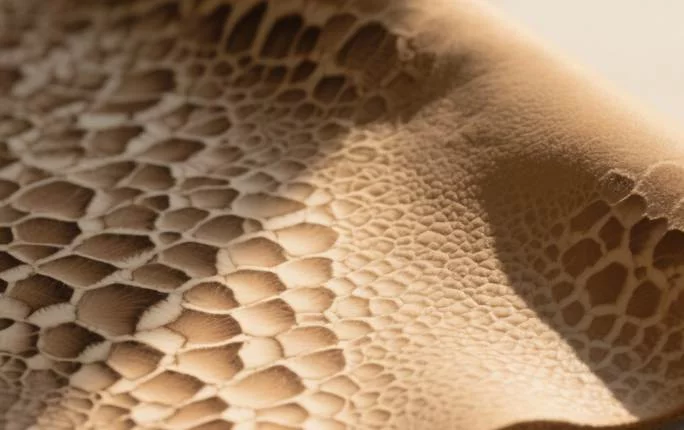
Is Mushroom Leather Real?
Yes, mushroom leather is a genuine and widely used eco-friendly material, but it is not derived from “animal leather”.
What “Real” Means?
This is a physical material that you can touch, cut, sew, and use to make products.
It is made from mycelium – the root-like structure of fungi – and is not just an idea or concept.
Why People Call It “Real”?
- Physical aspect: Nowadays, you can purchase wallets, straps, handbags and interior paneling made from this material.
- Performance aspect: Its tensile strength and wear resistance are now comparable to those of medium-weight cowhide; it can be sewn, embossed or printed like traditional leather.
- Sustainability indicators: Independent lifecycle assessment studies show that its water usage, land usage and greenhouse gas emissions are only a fraction of those of cowhide leather, and it avoids the use of toxic tanning chemicals during chrome tanning processes.
Why Some Might Question Its “Realness”?
- Novelty: Due to its relatively recent introduction, some people might confuse it with experimental or conceptual materials.
- Misunderstanding: Some believe that “mushroom leather” is merely a marketing term for synthetic leather, but it is a unique, biologically derived product.
It Is Not “Real Animal Leather”
If your definition of “real leather” strictly limits it to the skins obtained from cows, sheep, or other animals, then mushroom leather does not meet the requirements. It is a purely vegetarian alternative based on plants (fungi), and has no connection to animal products.
Mycelium Leather VS Animal Real Leather
| Aspect | Mushroom Leather (Mycelium Leather) | Traditional Animal Leather |
| Source | Mycelium (the underground root-like network of mushrooms) cultivated on agricultural waste. | Animal skin and hide. |
| Material Authenticity | A real bio-based material, falling under the category of vegan leather. | A genuine animal product. |
| Nature | Primarily consists of natural mycelium, processed to form a leather-like structure. | Primarily consists of collagen. |
| Key Difference | An artificially cultivated biomaterial with a growth cycle of just a few weeks. | The animal husbandry and processing are resource-intensive. |
| Environmental Profile | Low water consumption and carbon emissions during production, biodegradable. | Traditional tanning processes are more polluting and less degradable. |
Why Is Mushroom Leather Genuine?
- Why does it resemble genuine leather? The mycelium can form a dense network similar to the collagen in animal leather, thus providing similar softness, elasticity and durability. Even some brands claim that their products perform better in certain aspects than genuine leather.
- How “real” is it? Mushroom leather is already very close to high-quality animal leather in terms of visual appearance, touch and some physical properties. It can be tanned, dyed and embossed. Currently, international brands such as Hermès, Stella McCartney and Adidas have launched products using mushroom leather.
- Notable differences: As a new material, it does not develop the unique “aging” color and texture changes like genuine leather. Its maintenance method is also different from that of genuine leather. Usually, just wiping off dust is sufficient, and it is not recommended to use leather care oil.
How to Identify Genuine Mushroom Leather?
Not all “mushroom leather” products are of the same quality. Here are the methods to identify genuine products:
- Check the specific material names: Authentic products will indicate “Mylo” (by Bolt Threads) or “Reishi” (by MycoWorks).
- Look at the brand partnerships: Reputable brands will disclose their partnerships with companies like Bolt Threads or MycoWorks.
- Check the product description: Genuine mushroom leather products should provide detailed information about the mycelium cultivation process.
- Price point: Although prices are decreasing, genuine mushroom leather products usually have a higher price.
Overall, mushroom leather is a genuine and high-performance leather alternative. It is not made from animal genuine leather, but its texture and performance are constantly approaching those of real leather, while also offering significant environmental benefits.
What Is Mushroom Leather Used For?
Mushroom leather (mycelium leather) is a versatile and sustainable material that is widely used in the fields of fashion, home decoration, industrial design, and accessories – favored for its leather-like texture, biodegradability, and lack of cruelty.
The Application of Mushroom Leather in The Fashion Industry
Due to its ethical and environmentally friendly features, mushroom leather is gradually gaining popularity in the high-end and sustainable fashion sector.
Clothing:
- Jackets, coats, and vests (for example, the mushroom leather pilot jacket by Stella McCartney).
- Pants and skirts made from flexible and wrinkled mycelium sheets.
Footwear:
- Sneakers (such as Adidas’ Stan Smith Mylo™ shoes).
- Boots and sandals from brands like Bot Silk and McCorves.
Accessories:
- Wallets, belts and phone cases (such as the simple design by Muskin brand).
- Handbags and clutch bags (the “Sullivan” series by Hermès uses mushroom skin as a luxurious accessory material).
Applications in The Automotive Industry
The automotive industry is exploring the use of fungal leather to create eco-friendly interiors.
Seat Covers:
Companies like Botesilun are testing car seat covers made from fungal-based materials. This material offers a durable and lightweight alternative to leather or synthetic interior materials.
Dashboards and Decorative Elements:
Mushroom leather can be molded into panels or wrapped around the surface, creating a high-end and sustainable appearance.
Application of Furniture and Home Decor
Designers incorporate mushroom leather into furniture and decorative items, as it is favored for its unique texture and environmental-friendly properties.
Soft Furnishings:
Sofas, chairs, and low stools are decorated with mushroom leather (for example, products from Mikovis in collaboration with furniture designers).
Decorations:
Lampshades, wall hangings, and tabletop accessories are made from dyed or textured mycelium sheets.
Applications in The Packaging Field
The biodegradable nature of mushroom leather makes it highly suitable for use in eco-friendly packaging solutions.
Luxurious Packaging:
Brands like Ruth have already attempted to use materials based on mycelium to create cosmetic packaging.
Protective Packaging:
Customized mycelium foam or sheet materials based on the shape of the item, used to protect fragile items (such as electronic products or glassware).
Applications of Consumer Electronics
Technology companies are testing the use of mushroom-made leather to create device casings and accessories.
Mobile Phone and Laptop Cases:
Lightweight and shock-absorbing mycelium covers (for example, the biodegradable phone cases from Perla Company).
Wearable Technology:
Straps for smartwatches or fitness trackers, providing a breathable and low-allergenic alternative to replace silicone or leather materials.
Applications in Medicine and Industry
Although still in the early stages of development, the properties of mushroom leather may enable it to be suitable for specific purposes.
Biodegradable Filters or Membranes:
Their fibrous structure can be used in air or water filtration systems.
Sustainable Insulation Materials:
The natural insulation properties of the mycelium can be used to develop environmentally friendly building materials.
Why Do Brands Choose It?
- Its appearance and texture are similar to those of animal leather.
- It can be cultivated and shaped to achieve the desired size, thereby reducing waste.
- It has a smaller environmental impact compared to animal leather.
- It aligns with the values of veganism and cruelty-free practices.
Is Mushroom Leather Durable?
The durability of mushroom leather is moderate. High-quality mushroom leather can reach the practical standard of durability, suitable for use in daily items such as bags, but it still generally cannot match all the properties of top animal leather. However, with the latest advancements in materials science, its durability has significantly improved.
Key Factors Affecting Durability
- Surface treatment: Versions coated with plant-based wax or bio-resin have better water resistance and scratch resistance – which is crucial for bags and shoes used in humid environments. Uncoated mushroom leather is prone to absorbing moisture and may deform if damp.
- Usage scenarios: Suitable for light loads (mobile phones, wallets, keys) and dry, casual purposes. Not suitable for heavy applications (such as work bags, hiking boots) or prolonged contact with sharp objects (which may tear the mycelial structure).
- Process: Tightly sewn seams and reinforced stress points (such as the buckle connections on bags) significantly extend their lifespan.
Current Durability Performance
Physical Properties
- Tear strength: Some studies have shown that the tear strength of mushroom leather is superior to that of certain synthetic leathers, but it is still weaker than that of animal leather. For instance, a company in the United States improved the tear strength of the leather material by optimizing the cultivation conditions of the mycelium, increasing it by 30%, but it still did not reach the durability standard of cowhide.
- Wear resistance: In frequent friction scenarios (such as shoe uppers, seats), mushroom leather is prone to wear or shedding of fibers, and surface coating or composite processes are needed to improve it.
Environmental Adaptability
- Water resistance: The natural mycelium structure has a strong water absorption capacity, and waterproof performance needs to be enhanced through hydrophobic treatment (such as silicon-based coating), but this may affect breathability.
- Temperature resistance: Mushroom leather is prone to deformation at high temperatures and may become brittle at low temperatures. However, the improved material can maintain stability within the range of -40°C to 80°C, suitable for extreme climate scenarios.
Color Stability
The color fixation effect of natural dyes on mushroom leather is poor. Long-term exposure to sunlight or moisture can cause fading, and chemical dyes or nanotechnology are needed to enhance color fastness.
Core Durability Analysis by Type
Pure Mycelium Mushroom Leather (Premium Version)
Made from dense, undiluted fungal mycelium padding (such as MycoWorks’ Reishi™, Bolt Threads’ Mylo™), without synthetic adhesives.
- Service life: 5 to 8 years for accessories such as bags, wallets, and shoe uppers – comparable to medium-priced cowhide.
- Main advantages: Resistant to scratches, stretching, and minor wear; its natural antibacterial properties prevent mold growth due to occasional exposure to moisture.
- Best use: Daily-use fashion items, interior decoration, and lightweight coats.
Mixed Mushroom Leather (Economy Version)
Mixed with synthetic adhesives (such as polyurethane) or plant fibers to reduce cost and improve water resistance.
- Service life: 2 to 3 years for low-pressure items such as clasp covers, jewelry, or jacket decorations.
- Limitations: Synthetic additives reduce biodegradability, making this material prone to cracking when repeatedly bent; has weak resistance to heavy loads.
Mushroom Leather vs. Traditional Leather: Core Performance Comparison
To understand the durability of mushroom leather, a data comparison with animal leather is most illustrative. The table below contrasts their core mechanical properties:
| Performance Metric | High-Quality Mushroom Leather (After Reinforcement) | Traditional Animal Leather |
| Tensile Strength | 7.21 – 11.1 MPa | 8 – 25 MPa |
| Tear Strength | 0.5 – 0.8 N/mm | Usually higher, specific values vary by leather type and processing. |
| Elongation at Break | Approximately 15 – 30% | > 30% |
Interpretation: The tensile strength of mushroom leather can reach the medium to good level of animal leather (e.g., 11.1 MPa already exceeds the lower limit of 8 MPa), but its tear strength and elongation are typically weaker. This means it may be less resistant to snags from sharp objects and repeated bending compared to top-quality animal leather.
Durability Comparison to Other Materials
| Material | Durability Level | Key Takeaway |
| Pure Mushroom Leather | Moderate-High | Matches mid-range animal leather; better than PU |
| Blended Mushroom Leather | Low-Moderate | Less durable than pure versions; suitable for small accessories |
| Cow Leather (Mid-Range) | High | Longer lifespan (8–10 years) but higher environmental impact |
| PU Synthetic Leather | Low | Cheaper but prone to peeling after 1–2 years |
Is Mushroom Leather Biodegradable
Yes, it is biodegradable. The mushroom leather, which is centered around pure mycelium and does not contain any chemical synthetics, is completely biodegradable on its own. However, in the actual market, the situation can be more complicated, mainly depending on its final composition.
How Does Mushroom Leather Biodegrade?
Mushroom leather is mainly made from mycelium (a similar root-like structure of mushrooms) and natural plant fibers, which are organic materials that can be decomposed by microorganisms in the environment. If properly handled:
- In soil: Mushroom leather begins to decompose within a few weeks, and the complete biodegradation takes between 45 and 180 days, depending on the specific formula and environmental conditions.
- In compost: Under industrial composting conditions, this process is much faster than in natural soil environments.
- In landfills: Although it still decomposes faster than synthetic materials, the anaerobic environment in landfills significantly slows down this process.
The biodegradation process occurs because the natural microorganisms in the soil regard the mycelium and plant fibers as food sources and break them down into water, carbon dioxide, and organic substances that can enrich the soil.
Factors Affecting the Rate of Biodegradation
There are several factors that can influence the rate of degradation of mushroom leather:
- Material composition: Products with a higher content of mycelium decompose faster
- Environmental conditions: Warm and humid soil accelerates the degradation process
- Product thickness: Thinner items decompose more quickly
- Additives: Some mushroom leather products contain a small amount of non-biodegradable components to enhance durability
Real-world Biodegradability Tests
Several companies have conducted third-party tests to verify the biodegradability of their mushroom leather:
- MycoWorks: Their Reishi™ mushroom leather has been tested to decompose 95% within 12 weeks in a commercial compost environment.
- Bolt Threads: Mylo™, their mushroom leather alternative, has been shown to biodegrade in soil within 6 months.
- Ecovative: Their Mycelium™ material, used for packaging and building materials, decomposes in as little as 30 days in a home compost bin.
Comparison With Other Leathers
| Material | Biodegradable (in principle) |
| Mushroom leather (untreated) | ✓ Yes |
| Mushroom leather (with synthetic coatings) | ⚠ Maybe / slower |
| Animal leather (tanned) | ⚠ Slow / not reliably biodegradable |
| PU vegan leather | ✗ No (plastic-based) |
How To Determine If A Product Is Biodegradable?
To determine whether the mushroom leather product you want to know or purchase is truly biodegradable, you can pay attention to the following points:
- Check the material declaration: Look for clear labels such as “100% biobased”, “can be composted at home”, or “no plastic additives”. For example, some enterprises’ fabrics have received 100% biobased certification, and a study indicates that their materials are completely biodegradable.
- Be wary of “mixed” products: If a product only claims to “contain mycelium” or “plant-based”, but does not specify other ingredients, it is likely to contain non-biodegradable synthetic materials.
- Pay attention to leading brands and patents: Focus on research institutions that are dedicated to developing full biobased solutions (such as a university team that successfully produced a full biobased handbag) or companies with relevant patents (such as an enterprise that has developed a patent for renewable and biodegradable fungal materials). Their products are more likely to be truly biodegradable.
Pure Mushroom Leather vs Commercial Mushroom Leather
| Comparison Dimension | Pure Mushroom Leather (Base Mycelium Material) | Commercial Mushroom Leather Products (Requires Specific Verification) |
| Core Composition | Pure fungal mycelium, typically cultivated on agricultural waste. | Often a composite material that may include polyurethane (PU) coatings, fabric backing, or other chemical binders to enhance performance. |
| Biodegradability | Naturally biodegradable. As an organic biomass, under suitable composting conditions, it can be completely broken down by microorganisms into water, carbon dioxide, and organic matter. Research confirms its biodegradation potential. | Uncertain. Degradability depends on the proportion and type of added non-biodegradable components (e.g., plastics). If the proportion is high, it may not fully degrade. |
| Degradation Conditions | Requires industrial composting facilities providing specific temperature, humidity, and microbial environments for efficient and complete decomposition. | Same as above, and composite materials may hinder the decomposition process. |
| End Products | Transforms into humus, enriching the soil. | May leave behind microplastics or fragments of non-degradable synthetic materials. |
Conclusion
The pure mushroom leather has a lifespan of 5 to 8 years, and its durability can rival that of mid-to-high-end animal leather. The core advantage is its environmental sustainability. The pure material version can completely degrade in a compost environment within 6 to 12 months, and it has a short production cycle and no animal harm.
Mushroom leather is a promising step towards circular fashion, achieving a balance in sustainability, aesthetics, and functionality. Although it still has some shortcomings (such as cost and waterproof performance), continuous innovation is addressing these issues, making it an increasingly favored choice for environmentally-conscious consumers and designers.
If you also want to produce a batch of mushroom leather bags, please feel free to contact us to discuss the specific details.